.jpeg)
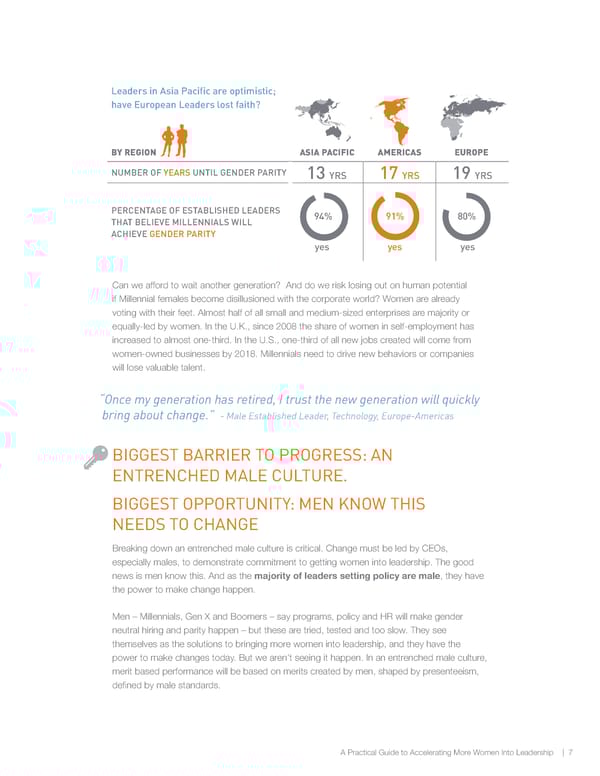
Leaders in Asia Pacific are optimistic; have European Leaders lost faith? BY REGION ASIA PACIFIC AMERICAS EUROPE NUMBER OF YEARS UNTIL GENDER PARITY 13 YRS 17 YRS 19 YRS PERCENTAGE OF ESTABLISHED LEADERS 94% 91% 80% THAT BELIEVE MILLENNIALS WILL ACHIEVE GENDER PARITY yes yes yes Can we afford to wait another generation? And do we risk losing out on human potential if Millennial females become disillusioned with the corporate world? Women are already voting with their feet. Almost half of all small and medium-sized enterprises are majority or equally-led by women. In the U.K., since 2008 the share of women in self-employment has increased to almost one-third. In the U.S., one-third of all new jobs created will come from women-owned businesses by 2018. Millennials need to drive new behaviors or companies will lose valuable talent. “Once my generation has retired, I trust the new generation will quickly - Male Established Leader, Technology, Europe-Americas bring about change.” BIGGEST BARRIER TO PROGRESS: AN ENTRENCHED MALE CULTURE. BIGGEST OPPORTUNITY: MEN KNOW THIS NEEDS TO CHANGE Breaking down an entrenched male culture is critical. Change must be led by CEOs, especially males, to demonstrate commitment to getting women into leadership. The good news is men know this. And as the majority of leaders setting policy are male, they have the power to make change happen. Men – Millennials, Gen X and Boomers – say programs, policy and HR will make gender neutral hiring and parity happen – but these are tried, tested and too slow. They see themselves as the solutions to bringing more women into leadership, and they have the power to make changes today. But we aren’t seeing it happen. In an entrenched male culture, merit based performance will be based on merits created by men, shaped by presenteeism, defined by male standards. A Practical Guide to Accelerating More Women Into Leadership | 7
 7 Steps to Conscious Inclusion Page 8 Page 10